CANTARE IL MISTERO

Singing the Divine Mystery

Secondo la tradizione papa Gregorio Magno, alla fine del 6° secolo, riformò la liturgia della Chiesa romana e raccolse le melodie che da lui prendono il nome.

Il canto gregoriano è il canto liturgico ufficiale della Chiesa cattolica, nato nell'VIII-IX secolo dall'unione del canto romano e gallicano durante l'impero carolingio. È una forma di musica monodica (a una sola voce), in latino, cantata a cappella (senza strumenti). Caratterizzato da un ritmo libero basato sul testo, è il pilastro della musica sacra occidentale, originariamente annotato con i neumi, i precursori dell’odierna notazione su pentagramma. I primissimi neumi erano grossolani schizzi segnati per indicare la forma generale della melodia, piuttosto che uno specifico insieme di note. Questo sistema fu ridefinito, per poi diventare una più precisa rappresentazione di tonalità.

I canti gregoriani sono organizzati in differenti modi, che sono i precursori del moderno concetto di tonalità. Oggi, la musica occidentale è spesso divisa in due tonalità principali: maggiore e minore, con una gamma di scale che rientrano in queste due categorie. Il canto gregoriano è generalmente diviso in otto modi. Tutti sono caratterizzati dai loro intervalli; cioè da quanto è grande una ‘distanza’ musicale tra ogni nota, solitamente un intero tono (la distanza tra un DO e un RE), o l’intervallo più piccolo chiamato semitono (la distanza ad esempio tra un SI e un DO, o tra un DO e un DO diesis).
Gli otto modi erano vastamente usati tra l’VIII e il XVI secolo. I modi gregoriani sono divisi in modi autentici e plagali

Tra il VI e il VI secolo lo sviluppo del monachesimo favorì la definizione della liturgia dell'Ufficio delle ore. Nel Medioevo, infatti, la vita del monaco alternava la preghiera al lavoro ed era suddivisa in otto appuntamenti di preghiera: mattutino (prima dell'alba); laudi (dopo l'alba); ora prima (alle 6 del mattino); terza (ore 9); sesta (ore 12); nona (ore 15); vespri (ore 17) e compieta (ore 20). Durante questi momenti di preghiera i monaci intonavano salmi, inni, responsori (canti in cui al verso intonato dal celebrante risponde un ritornello corale).

Parallelamente si vennero fissando i periodi dell'anno liturgico (Avvento, Natale, Quaresima, Pasqua, Ascensione, Pentecoste) e la liturgia musicale della messa. Quest'ultima comprendeva la serie di canti del Proprio della messa (IntroitoGradualeAlleluiaTrattoOffertorioComunione), i cui testi variavano a seconda del periodo liturgico, e i canti dell'Ordinario della messa (KyrieGloriaCredoSanctus e BenedictusAgnus Dei), con testi che non variavano durante l'anno liturgico.

 Il canto gregoriano ha accompagnato il rito religioso cattolico per più di mille anni, fino al Concilio Vaticano II (1962-65). Questo grande patrimonio di melodie modali, il cui ritmo segue l'accentuazione delle parole, è diventato nel corso della storia musicale occidentale un esempio e un modello di arte sacra

______________________________________________________________________________________________

According to tradition, Pope Gregory I, at the end of the 6th century, reformed the liturgy of the Roman Church and collected the melodies that later took his name.

Gregorian chant is the official liturgical chant of the Catholic Church, born in the 8th–9th centuries from the union of Roman and Gallican chant during the Carolingian Empire. It is a form of monodic music (a single melodic line), in Latin, sung a cappella (without instruments). Characterized by a free rhythm based on the text, it is a cornerstone of Western sacred music and was originally notated using neumes, the precursors of modern staff notation. The earliest neumes were rough sketches marked to indicate the general shape of the melody rather than a specific set of notes. This system was later refined and developed into a more precise representation of pitch.

 Gregorian chants are organized in different modes, which are the precursors of the modern concept of tonality. Today, Western music is often divided into two main tonalities: major and minor, with a range of scales that fall within these two categories. Gregorian chant, however, is generally divided into eight modes. All of them are characterized by their intervals; that is, by how large the musical “distance” is between each note, usually a whole tone (the distance between C and D), or the smaller interval called a semitone (for example, the distance between B and C, or between C and C-sharp).

The eight modes were widely used between the 8th and the 16th centuries. Gregorian modes are divided into authentic and plagal modes.

Between the 6th and 7th centuries, the development of monasticism favored the definition of the liturgy of the Liturgy of the Hours. In the Middle Ages, the life of a monk alternated between prayer and work and was divided into eight moments of prayer: Matins (before dawn); Lauds (after dawn); Prime (at 6 a.m.); Terce (9 a.m.); Sext (12 p.m.); None (3 p.m.); Vespers (5 p.m.); and Compline (8 p.m.). During these moments of prayer, monks sang psalms, hymns, and responsories (chants in which a choral refrain responds to the verse sung by the celebrant).

At the same time, the periods of the liturgical year were established—such as Advent, Christmas, Lent, Easter, Ascension, and Pentecost—along with the musical liturgy of the Mass. The latter included the series of chants of the Proper of the Mass (Introit, Gradual, Alleluia, Tract, Offertory, Communion), whose texts varied according to the liturgical season, and the chants of the Ordinary of the Mass (Kyrie, Gloria, Credo, Sanctus and Benedictus, Agnus Dei), whose texts remained unchanged throughout the liturgical year.

Gregorian chant accompanied the Catholic religious rite for more than a thousand years, until the Second Vatican Council (1962–1965). This vast heritage of modal melodies, whose rhythm follows the accentuation of the words, has become throughout the history of Western music an example and a model of sacred art.
 

Ubi charitas et amor

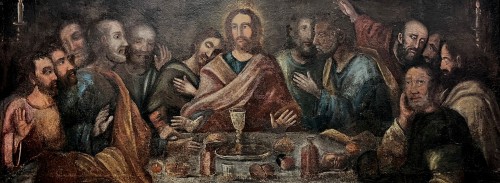
 Si canta il giovedi santo alla lavanda dei piedi

Dove regna carità ed amore, qui è Dio.

Ci ha raccolti in una cosa sola l´amore di Cristo:
esultiamone, e nel suo amore rallegriamoci!
Nel timore di lui, amiamo il Dio vivente,
ed amiamoci di cuore, sinceramente!

Dove regna carità ed amore, qui è Dio

Quando tutti insieme ci raduniamo,
che la dubbiezza non ci divida, questo temiamo;
smetta la malvagità del cuore, sia fine all´odio,
ed in mezzo a noi solo rimanga il Cristo, Dio.

Dove regna carità ed amore, qui è Dio

Che tutti insieme, fra i beati, possiamo contemplare
nella gloria il tuo volto, o Cristo Dio!
Ciò significa la gioia smisurata e la dolcezza,
per i secoli dei secoli, senza fine! Amen.

___________________________________________

It is sung on Holy Thursday during the washing of the feet

Where charity and love prevail, there God is.
The love of Christ has gathered us into one:
let us rejoice in it and be glad in His love!
In reverent awe, let us love the living God,
and love one another with sincere hearts!

Where charity and love prevail, there God is.

When we are gathered together as one,
let us beware that division does not separate us;
let the wickedness of the heart cease, let hatred end,
and in our midst remain only Christ our God.

Where charity and love prevail, there God is.

May we all together, among the blessed,
contemplate in glory Your face, O Christ our God!
This will be boundless joy and sweetness
for ever and ever, without end. Amen.


Pange lingua gloriosi

 Si canta il giovedi santo durante la processione con l'Eucarestia

 Il Verbo incarnato con la sua parola

trasforma il vero pane nella sua Carne;
il vino diventa Sangue di Cristo
e, se il senso si smarrisce,
la fede sola basta a rafforzare cuore sincero.

Tantum ergo sacramentum
veneremur cernui,
 et antiquum documentum
novo cedat ritui;
præstet fides supplementum
sensuum defectui.

Così gran Sacramento
dunque veneriamo prostati:
ceda la vecchia Legge
al Sacrificio nuovo:
supplisca la fede
al difetto dei sensi.

Genitori Genitoque
laus et iubilatio,
salus, honor, virtus quoque
sit et benedictio;
procedenti ab utroque
compar sit laudatio. Amen.

Al Padre e al Figlio,
sia lode e giubilo,
salute, onore,
potenza e benedizione:
A Colui che procede da ambedue,
pari azione di lode sia. Amen.

______________________________

It is sung on Holy Thursday during the procession with the Eucharist

The Word made flesh, by His own word,
transforms the true bread into His Body;
the wine becomes the Blood of Christ,
and though the senses fail to grasp it,
faith alone is enough to strengthen the sincere heart.

Therefore, so great a Sacrament
let us venerate with bowed heads;
let the ancient covenant
give way to the new rite;
let faith provide what is lacking
to the weakness of the senses.

So great a Sacrament,
therefore let us adore it in reverence:
let the old Law
yield to the new Sacrifice;
let faith supply
for the defect of the senses.

To the Father and to the Son
be praise and jubilation,
salvation, honor,
power and blessing;
and to the One who proceeds from both
be equal praise. Amen.

Ecce lignum Crucis - Vexilla regis prodeunt

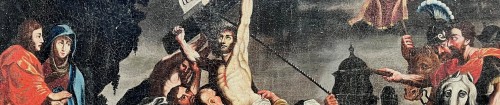
 Si canta il venerdì santo all'ingresso della Croce

 Ecco il legno della Croce

al quale fu appeso il Cristo,
Salvatore del mondo.

Rit. Venite, adoriamo.

_____________________

It is sung on Good Friday at the entrance of the Cross

Behold the wood of the Cross
on which Christ was hung,
the Savior of the world.

Rit. Come, let us adore.

***************************

Si canta il venerdì santo durante l'adorazione della Croce

Del Re vanza il vessillo:
Della Croce rifulge il mistero,
Onde a morte distrusse l'impero
El che a tutti la vita rendé.
Del Divino Paziente le mani
Qui trafissero i chiodi ferali:
E a riscatto di tutti i mortali
Qui l'Eterno olocausto si fè.
Qui da barbara lancia si vide
Il divino costato trafitto,
E a mondarci del primo delitto
Sangue insieme con acqua versò.
E fu allor che del regio profeta
Si compié la famosa parola,
Lorché disse: Israel, ti consola,
Che l'Eterno da un legno regnò.
O dell'ostro regal rivestito,
Arbor santo, fra mille, tu solo
Del Signor della terra e del polo
L'almo corpo trascelto a toccar.
La salute del mondo sostennero
Le tue braccia tre volte beate,
E le schiere d'Abisso, spogliate,
Di lor preda, si vider tremar.
Salve, Croce, che l'unica speme
Sei dell'uomo: tu compine i voti;
Per te cresca la grazia ai devoti,
E de' rei si cancelli l'error.
Ogni spirto ti lodi, gran Triade,
E di lor che a salvezza Tu guidi,
Per la croce muovanti i gridi,
E li guarda con occhio d'amor.

__________________________

It is sung on Good Friday during the veneration of the Cross

The banners of the King advance;
the mystery of the Cross shines forth,
by which He who gave life to all
destroyed the empire of death.

Here the hands of the Divine Sufferer
were pierced by cruel nails;
and here, for the ransom of all mortals,
the eternal sacrifice was made.

Here a barbarous lance
pierced the sacred side,
and to cleanse us from the first sin
He poured forth blood together with water.

Then was fulfilled the famous word
of the royal prophet,
when he said: “Israel, take comfort,
for the Lord has reigned from a tree.”

O tree clothed in royal purple,
holy tree, among thousands you alone
were chosen to touch
the sacred body of the Lord of heaven and earth.

Your thrice-blessed arms
bore the salvation of the world;
and the hosts of the abyss, stripped
of their prey, were seen to tremble.

Hail, O Cross, the only hope of mankind:
fulfil the prayers of the faithful;
through you may grace increase for the devout,
and the sins of the guilty be erased.

May every spirit praise You, O great Trinity;
and for those whom You lead to salvation,
through the Cross may their prayers rise,
and look upon them with loving eyes.

Exultet - Victime paschali laudes

 Si canta la notte di Pasqua

Esulti il coro degli angeli,
esulti l'assemblea celeste:
un inno di gloria saluti il trionfo del Signore risorto.
Gioisca la terra inondata da così grande splendore;
la luce del Re eterno ha vinto le tenebre del mondo.
Gioisca la madre Chiesa, splendente della gloria del suo Signore,
e questo tempio tutto risuoni
per le acclamazioni del popolo in festa.
E voi, fratelli carissimi,
qui radunati nella solare chiarezza di questa nuova luce,
invocate con me la misericordia di Dio onnipotente.
Egli che mi ha chiamato, senza alcun merito,
nel numero dei suoi ministri, irradi il suo mirabile fulgore,
perché sia piena e perfetta la lode di questo cero.

Il Signore sia con voi.
E con il tuo spirito.

In alto i nostri cuori.
Sono rivolti al Signore.

Rendiamo grazie al Signore, nostro Dio.
È cosa buona e giusta.

È veramente cosa buona e giusta
esprimere con il canto l'esultanza dello spirito,
e inneggiare al Dio invisibile, Padre onnipotente,
e al suo unico Figlio, Gesù Cristo nostro Signore.

Egli ha pagato per noi all'eterno Padre il debito di Adamo,
e con il sangue sparso per la nostra salvezza
ha cancellato la condanna della colpa antica.
Questa è la vera Pasqua, in cui è ucciso il vero Agnello,
che con il suo sangue consacra le case dei fedeli.
Questa è la notte in cui hai liberato i figli di Israele, nostri padri,
dalla schiavitù dell'Egitto,
e li hai fatti passare illesi attraverso il Mar Rosso.
Questa è la notte in cui hai vinto le tenebre del peccato
con lo splendore della colonna di fuoco.
Questa è la notte che salva su tutta la terra i credenti nel Cristo
dall'oscurità del peccato e dalla corruzione del mondo,
li consacra all'amore del Padre
e li unisce nella comunione dei santi.
Questa è la notte in cui Cristo, spezzando i vincoli della morte,
risorge vincitore dal sepolcro.
Nessun vantaggio per noi essere nati, se lui non ci avesse redenti.
O immensità del tuo amore per noi! O inestimabile segno di bontà:
per riscattare lo schiavo, hai sacrificato il tuo Figlio!
Davvero era necessario il peccato di Adamo,
che è stato distrutto con la morte del Cristo.
Felice colpa, che meritò di avere un così grande redentore!
O notte beata, tu sola hai meritato di conoscere
il tempo e l'ora in cui Cristo è risorto dagli inferi.
Di questa notte è stato scritto: la notte splenderà come il giorno,
e sarà fonte di luce per la mia delizia.
Il santo mistero di questa notte sconfigge il male,
lava le colpe, restituisce l'innocenza ai peccatori,
la gioia agli afflitti.
Dissipa l'odio, piega la durezza dei potenti,
promuove la concordia e la pace.
O notte veramente gloriosa,
che ricongiunge la terra al cielo e l'uomo al suo creatore!
In questa notte di grazia accogli, Padre santo, il sacrificio di lode,
che la Chiesa ti offre per mano dei suoi ministri,
nella solenne liturgia del cero,
frutto del lavoro delle api, simbolo della nuova luce.
Riconosciamo nella colonna dell'Esodo
gli antichi presagi di questo lume pasquale
che un fuoco ardente ha acceso in onore di Dio.
Pur diviso in tante fiammelle non estingue il suo vivo splendore,
ma si accresce nel consumarsi della cera
che l'ape madre ha prodotto
per alimentare questa preziosa lampada.
Ti preghiamo, dunque, Signore, che questo cero,
offerto in onore del tuo nome
per illuminare l'oscurità di questa notte,
risplenda di luce che mai si spegne.
Salga a te come profumo soave,
si confonda con le stelle del cielo.
Lo trovi acceso la stella del mattino,
questa stella che non conosce tramonto:
Cristo, tuo Figlio, che risuscitato dai morti
fa risplendere sugli uomini la sua luce serena
e vive e regna nei secoli dei secoli.
Amen.

_____________________________________

 It is sung on Easter Night

Exult, let the angel hosts of heaven exult,
let the divine mysteries rejoice;
let the trumpet of salvation
sound aloud our mighty King’s triumph.

Be glad, let earth be glad, as glory floods her,
ablaze with light from her eternal King;
let all corners of the earth be glad,
knowing an end to gloom and darkness.

Rejoice, let Mother Church also rejoice,
arrayed with the lightning of his glory;
let this holy building shake with joy,
filled with the mighty voices of the peoples.

Therefore, dearest brothers and sisters,
standing in the awesome glory of this holy light,
invoke with me, I ask you,
the mercy of God almighty,
that he who has been pleased to number me,
though unworthy, among the Levites,
may pour into me his light unshadowed,
that I may sing this candle’s perfect praises.

The Lord be with you.
And with your spirit.

Lift up your hearts.
We lift them up to the Lord.

Let us give thanks to the Lord our God.
It is right and just.

It is truly right and just,
with ardent love of mind and heart
and with devoted service of our voice,
to acclaim our God invisible, the almighty Father,
and Jesus Christ, our Lord, his Son, his Only Begotten.

Who for our sake paid Adam’s debt to the eternal Father,
and, pouring out his own dear Blood,
wiped clean the record of our ancient sin.

These, then, are the feasts of Passover,
in which is slain the Lamb, the one true Lamb,
whose Blood anoints the doorposts of believers.

This is the night
when once you led our forebears, Israel’s children,
from slavery in Egypt
and made them pass dry-shod through the Red Sea.

This is the night
that with a pillar of fire
banished the darkness of sin.

This is the night
that even now, throughout the world,
sets Christian believers apart from worldly vices
and from the gloom of sin,
leading them to grace
and joining them to his holy ones.

This is the night
when Christ broke the prison-bars of death
and rose victorious from the underworld.

Our birth would have been no gain
had we not been redeemed.

O wonder of your humble care for us!
O love, O charity beyond all telling!
To ransom a slave
you gave away your Son.

O truly necessary sin of Adam,
destroyed completely by the Death of Christ!
O happy fault
that earned so great, so glorious a Redeemer!

O truly blessed night,
worthy alone to know the time and hour
when Christ rose from the underworld!

This is the night of which it is written:
“The night shall be as bright as day,
dazzling is the night for me, and full of gladness.”

The sanctifying power of this night
dispels wickedness, washes faults away,
restores innocence to the fallen, and joy to mourners;
drives out hatred, fosters concord, and brings down the mighty.

On this, your night of grace, O holy Father,
accept this candle, a solemn offering,
the work of bees and of your servants’ hands,
an evening sacrifice of praise,
this gift from your most holy Church.

But now we know the praises of this pillar,
which glowing fire ignites for God’s honor,
a fire into many flames divided,
yet never dimmed by sharing of its light.


For it is fed by melting wax,
drawn out by mother bees
to build a torch so precious.

O truly blessed night,
when things of heaven are wed to those of earth,
and divine to the human.

Therefore, O Lord,
we pray you that this candle,
hallowed to the honor of your name,
may persevere undimmed
to overcome the darkness of this night.

May its light be mingled with the lights of heaven,
and may the morning star find it burning,
that morning star who never sets,
Christ your Son,
who, coming back from death’s domain,
has shed his peaceful light on humanity,
and lives and reigns for ever and ever.

Amen.

***********************************************

Si canta il giorno di Pasqua 

Alla Vittima pasquale
i cristiani offrano lodi.

L'Agnello ha redento le pecorelle:
Cristo innocente ha riconciliato
i peccatori con il Padre.

La morte e la vita
si sono battute in uno stupefacente duello:
il signore della vita, morto, vivo regna.

Dicci, Maria, che hai veduto per via?
"Ho visto il sepolcro di Cristo vivente
e la gloria di lui risorto.

Gli angeli testimoni,
il sudario e le vesti.

È risorto Cristo, mia speranza:
precederà i suoi in Galilea."

Sappiamo che Cristo
è veramente risorto dai morti:
tu, o re vittorioso, abbi pietà di noi.

Amen.Alleluia.

______________________________

It is sung on Easter Sunday

To the Paschal Victim
let Christians offer a sacrifice of praise.

The Lamb has redeemed the sheep;
Christ the innocent
has reconciled sinners with the Father.

Death and life
have contended in a wondrous battle:
the Prince of life, who died,
now lives and reigns.

Tell us, Mary,
what did you see on the way?

“I saw the tomb of the living Christ
and the glory of his resurrection.

The angels were witnesses,
the burial cloths and the garments.

Christ, my hope, has risen;
he will go before his own into Galilee.”

We know that Christ
is truly risen from the dead:
O victorious King,
have mercy on us.